What to look at, and what it costs later
Somebody has spent the week making this house look easy. Here’s the list we run in our heads while everyone else admires the benchtop.
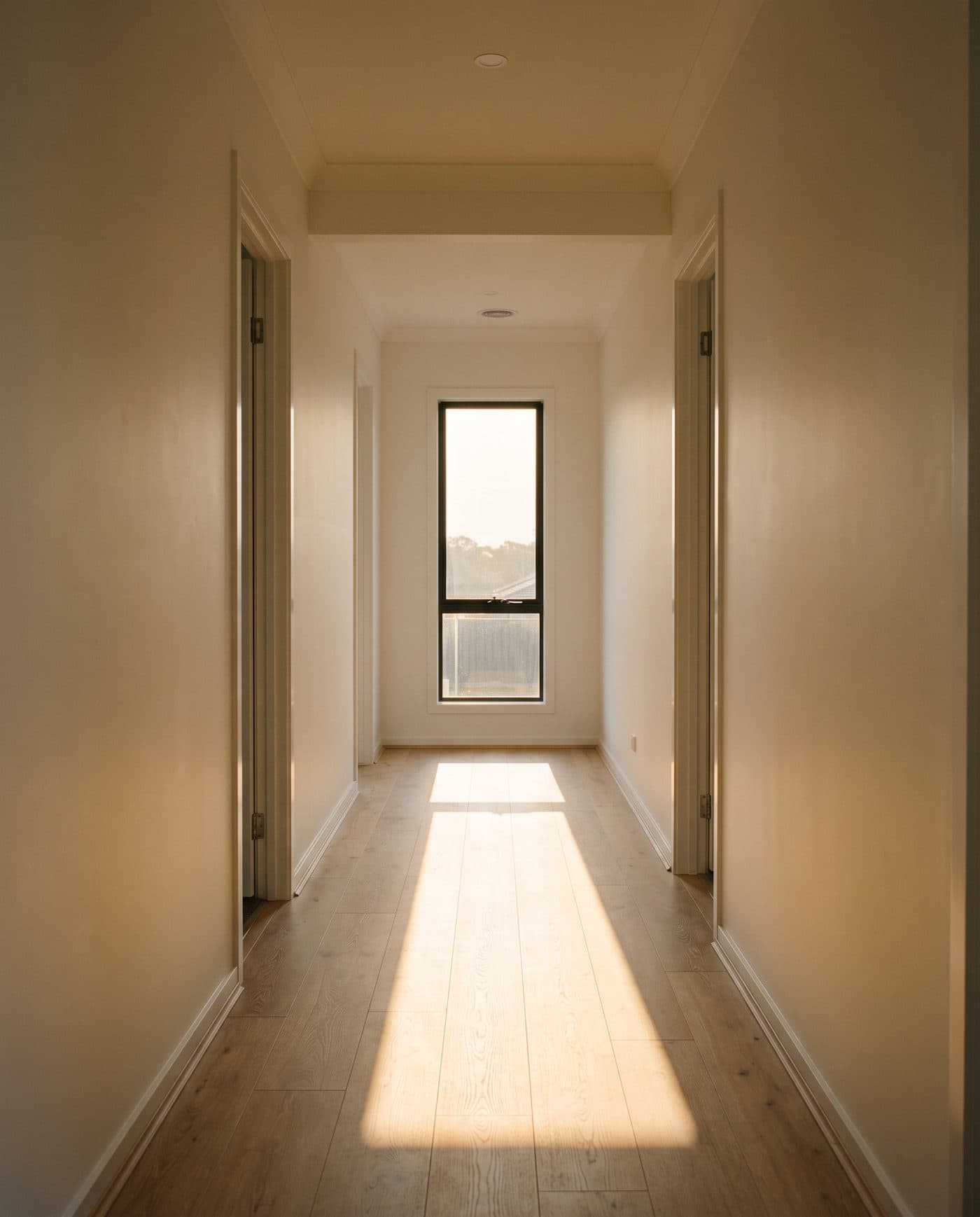
Twenty minutes in a stranger’s house, an agent talking, a candle burning somewhere, and from that you’re meant to decide something enormous. Nobody looks properly under those conditions. So do it backwards. Walk in with a list, get the ugly parts out of the way first, and admire the kitchen on your way out.
Before you go in
Stand on the footpath for a minute and look at the roofline, the gutters and the ground. Most of the expensive problems in a house announce themselves from outside, and none of them make the listing photographs. While you’re out there, work out which way the back of the house faces. That decides which rooms get the winter sun and which ones cook in February.
Then look at the neighbours, at the block on the corner, at the empty land down the end. You’re buying the street as much as the house, and in a new estate the street is often not finished yet.
The list we run
Roughly in this order, worst first. If one of these is bad, the benchtop stops mattering and you can leave early.
- Ceilings, in every room, in the corners and around the light fittings. A brown ring, or a patch of fresh paint on a ceiling that hasn’t otherwise been touched, means water has been in. Water is never cheap.
- The join where the roof meets a wall, inside and out, and the ceiling directly under any upstairs bathroom.
- Wet areas. Press your foot near the shower base and feel for movement, look hard at the grout and the silicone, and tap a few tiles to hear whether they sound hollow.
- Under the kitchen sink and under the vanity. Swollen, crumbling chipboard down there is a leak that’s been running quietly for a long time.
- Run the taps, all of them, hot and cold, and flush a toilet while a tap is going so you can see what happens to the pressure.
- Open and close every window and every door, including the ones painted shut. Doors that stick, and cracks running diagonally from the corner of a door frame, are the house telling you it’s moved.
- The floors. Walk through the middle of each room and feel for bounce or slope, especially in older places.
- The meter box. Ceramic fuses with wire in them instead of circuit breakers, and no safety switch, means a rewire is somewhere in your future.
- The hot water unit. Find it, check for rust around the base, and read the date stamped on the plate.
- Where the downpipes go. If one simply ends at the soil beside the house instead of joining the stormwater, you’ve probably found the source of a damp problem.
- The ground level against the outside walls. Soil, concrete or a garden bed sitting above the damp course will pull water up into the brickwork, and the fix is unglamorous and not cheap.
- Brickwork at the corners and above the windows, for cracks that step down through the mortar joints.
- The roof, from the street and from the back yard. Slipped or lifted tiles, rust in the valleys, a tarpaulin, or one very new patch of tiles in a single spot.
- The fences, and which of them are yours. A collapsing boundary fence is a conversation with a neighbour you haven’t met.
- The smell. Damp, mould, and fresh paint in one room when the rest of the house hasn’t been touched.
- Phone reception, standing still in the middle of the house.
- Where the bins live, where a second car goes, and whether anything with a trailer can get in and out.
When the house is brand new
A new build hides different things. Nothing has had time to go wrong yet, so what you’re really checking is the quality of the work and the honesty of the inclusions list.
- The inclusions. Fencing, landscaping, the driveway, blinds, flyscreens, the letterbox and the clothesline are often outside the build price, and together they land as a real bill in the month you have the least of it.
- Wet area floors: water should run towards the drain, not away from it. Tip a little on and watch where it goes.
- Cornices, skirting joins, door frames and the line where two sheets of plasterboard meet. Rough work here tends to say something about the work you can’t see.
- Every door and drawer, every window lock, every power point, and the hot and cold on every tap.
- The gaps around windows and external doors, and whether the seals actually meet.
- What sits behind the fence at the end of the street, and which stage of the estate gets built next.
Ask for the builder’s warranty paperwork and the defects process in writing, and ask how long you have to report things after handover. It’s a real right with a real deadline, and plenty of people learn where the deadline was only after it went past.
Then go back a second time
Everything above can be done on a first walk-through. What a first walk-through can’t tell you is what the place is like to live in, because you saw it at eleven on a Saturday, staged, windows open, with something in the oven.
So go back. Park outside on a weeknight after work, and again early on a Sunday. Listen for the freeway, the train line and the main road. Watch where people park. If you can, stand in the living room at the hour you’d actually be in it.
Or bring us with you. We walk through these for a living, and it’s much easier to point at a thing than to describe it on a page.
On the day
- Where we walk homes
- Cranbourne East, Clyde, Doveton and Hampton Park
- Ask us in
- Hazargi, English or Urdu
- Walk one with Mehr
- 0474 189 561
Also worth reading
The settlement guide covers the final inspection, which is the second time you walk through the place with a list in your hand.
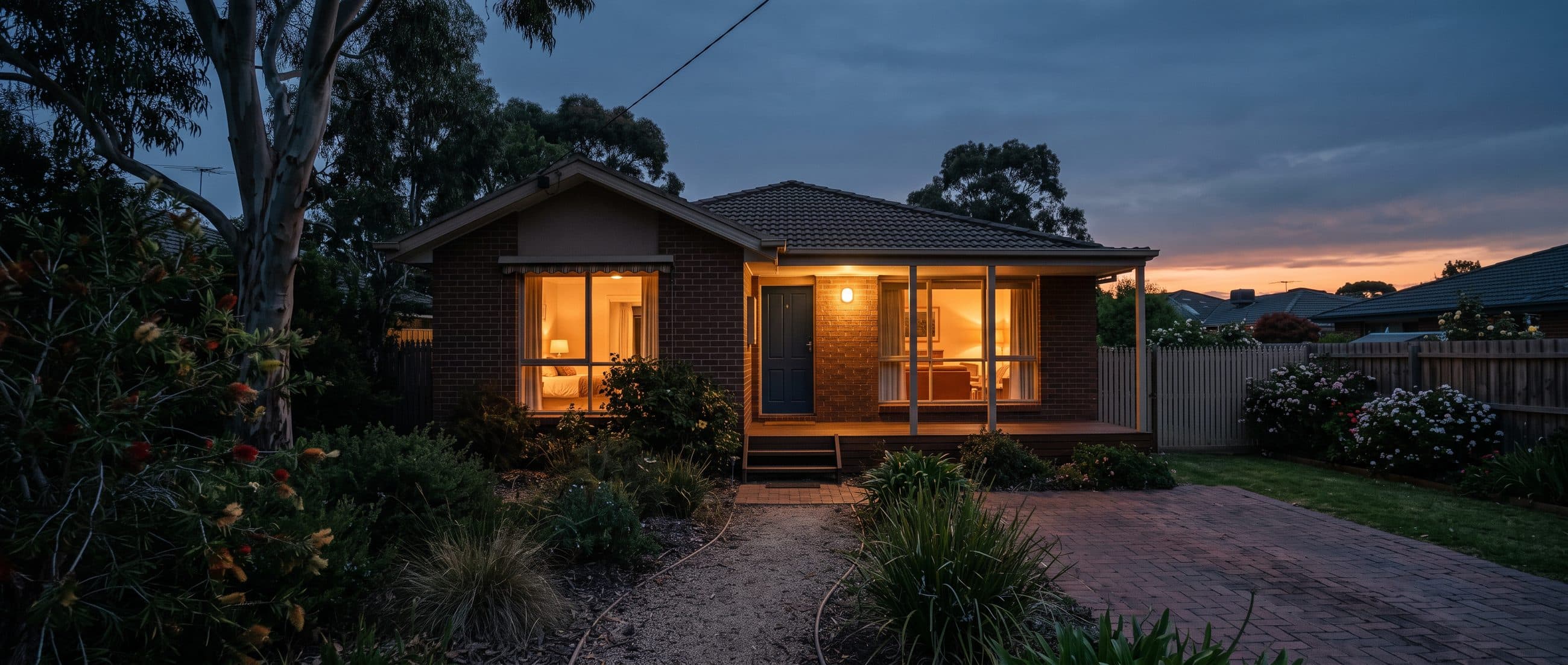
Come and walk one with us
Send us the address of anything you’re looking at, ours or someone else’s. We’ll tell you what we would check first, and we’ll come and stand in it with you.
Call Mehr on 0474 189 561